
The doorway she stepped through closed behind her without a sound. Not shut. Not sealed. Just… gone. Like it had never been there.
The thread stayed present, quiet now—not pulsing, not pulling. Just there, like a breath she hadn’t taken yet.
The world opened into emptiness. Not barren, not broken, simply… waiting. A stretch of endless road beneath a sky coloured in fading twilight, washed with hues of indigo and sand. Buildings rose along either side of her, hollowed out and silent.
She breathed out slowly. Still moving. No orders. Just thread, and will.
She walked for a while, not quickly, not lost—just following the thread. The road was cracked but steady beneath her boots, and as she continued on, the edges of the city began to blur. Sand crept up through the seams in the pavement, swallowing curbs, coating doors, softening every hard line.
Before long, it was impossible to tell where the city ended and the desert began. They had joined. One bleeding into the other.
The world didn’t shift so much as give up its borders.
Ahead, movement caught her attention—slow, rhythmic, methodical. She squinted into the deepening dusk.
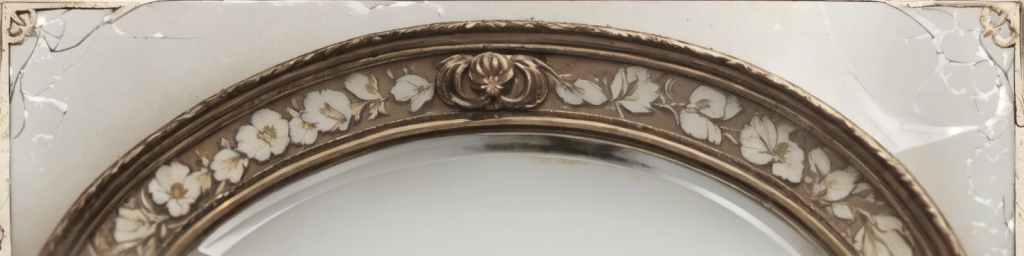
An old woman pushed a cart, piled impossibly high with a chaotic collection of objects: rusted bicycles, battered suitcases, books with cracked spines, tarnished trophies, dolls with missing eyes, an assortment of mismatched shoes—and near the top, a cracked hand mirror, its surface webbed with fine fractures but still reflecting light. Each item balanced precariously atop the next, defying gravity by sheer stubbornness.
But she only saw her from behind.
The woman wore a long, patchworked jacket, its seams repaired a dozen times in a dozen different ways. A rucksack hung off one shoulder, faded with time, fraying at the edges. Several bags clinked gently as they swung from hooks along the cart’s frame. Her hat—wool, lumpy, hand-knit—sat snug over grey, wind-tousled hair. Fingerless gloves covered her hands as she gripped the cart.
The old woman moved with slow grace, steady despite the burden.
The cart itself should not have worked. It wobbled under the weight, its wheels rusted and shrieking softly against the road, yet it stayed upright. Somehow.
The thread tugged softly at her wrist.
She hesitated. Then raised her hand.
“…Hello?”
The fog swallowed her voice, but the woman ahead stopped. She didn’t turn. Just stood, hands on the cart, still as a memory.
Another step forward.
Steam rose faintly from the woman’s breath. The layered coat shifted with the slow rhythm of her chest.
Then, at last, she moved.
The turn was gradual. Shoulder, hip, boot. A gesture repeated countless times across lifetimes.
When the woman’s face came into view, she slowed—but didn’t stop.
She’d met versions of herself before. In mirrors. In echoes. In empty stations and impossible loops. But this one was different.
Older.
But weathered and graceful in ways she hadn’t imagined she could be. Creased with life, not regret. Her eyes were still sharp, still curious, but softened by things she hadn’t lived yet.
The recognition landed like a quiet avalanche.
“…Am I really you?” she whispered.
The old woman tilted her head slightly. Familiar. Measured.
“Feels weird, doesn’t it?” Her voice was soft, dry, and full of long roads. “Seeing yourself weathered. Stretched by time. Not from waiting, but from running every crooked rooftop and sprinting through too many locked doors. But yes.”
A breath passed between them.
“I’m what happens when you keep going.”
Her gaze fell to the cart—to the suitcase with her name etched in fading marker, to the old broken blade she once trained with, to the teddy bear she hadn’t seen since she was six.
“Why carry it all?” she asked, breath catching.
The old woman chuckled.
“Because I did. Because I still do. Some things never let go. Some things, I chose to keep.”
“How is this possible? Is this real? A vision? A trick of the thread?”
“Maybe. Maybe not. Threads don’t care about logic. They care about truth. And sometimes, truth looks like this.”
She threw one arm wide toward the cart, like she was unveiling a statue. Not proud, exactly—just honest.
Another pause. A question burned in her throat.
“What do you remember?”
The old woman looked at her—truly looked. Then smiled, slow and crooked, and spoke.
“I remember running. Climbing high where I wasn’t supposed to be. Storms I chased on purpose. The thrill of a fall caught just in time. Bruises that made me laugh. Familiar faces caught mid-motion—clapping palms in passing, sharing a grin between rooftops—gone again before names could stick. Names etched into sandshoes, lockers, ticket stubs. And I remember choosing not to slow down—because stillness never felt safe.”
She rested her hands on the cart again.
“You think you’re still deciding who you are. I remember when you asked me that.”
Her eyes glinted in the dim.
“So… ask the real one.”
She blinked again, slower this time. Her fingers twitched, restless like always. If there was ever a moment to bluff, to laugh it off, to do a sidestep and dodge the truth—this wasn’t it.
So she looked herself in the eye. The version that had outlasted all the noise, all the rush, all the detours that felt like destiny at the time.
And she asked—raw and real:
“Go on, ask it. Was it all worth it?”
The younger one blinked. Swallowed.
“Was it worth it?”
The old woman grinned. Not wide. Not forced. Just a quiet curve of knowing—like someone who’d seen every version of this question and still welcomed it.
She shrugged. A slow, easy lift of the shoulders—like someone who knew the answer wasn’t simple, but still stood by it.
“Every weight I kept. Every step I didn’t take. Every one I did. We all have choices. Some loud. Some small. Some disguised as failure, but actually the next breath forward. I chose movement. I chose stubborn joy. I kept showing up—especially when no one else did. It wasn’t always graceful, but it was real. And every messy, defiant step shaped what I became.”
The younger one shifted her stance, arms crossed now, jaw tight. Not in defiance—but in thought.
She didn’t answer right away. Didn’t move.
She let the silence stretch a breath longer, then:
She stood quiet, letting the words settle. Not just the answer, but the weight behind it. The shape of years. The bruises and roads and stubborn joy that led to this version of herself.
She rubbed her thumb along the edge of her palm, feeling the roughness there.
“Some of that… yeah,” she said, voice low. “Sounds like me. Maybe not all the time. Maybe not always on purpose. But I know those choices. I’ve made them too.”
She looked up again, brow furrowed—not in confusion, but in the effort of honesty.
“I thought I’d want a different answer. Or a cleaner one. Something more…”
She trailed off, unsure how to finish, then steadied herself.
“But this—” She gestured at the cart, at the quiet road, at the woman she might become. “—this feels like the truth.”
She stepped forward, not closing the distance, just leaning into the moment.
“If that’s the shape of it, then yeah… I can live with that. Maybe even grow into it.”
The old woman snorted, turned, and gave the cart a sideways look like it had just muttered something rude. She nudged one of the wheels with her boot — half inspection, half warning.
It wobbled. As if in protest.
Then she pushed the whole cart forward once. Then pulled it back. Forward. Back. Testing it like an old rhythm she’d danced with before.
A faint metallic groan. A snap.
One of the wheels clattered off and rolled in a lazy, lopsided arc into the sand.
The old woman sighed. Not annoyed. Not surprised.
“Figures.”
As she bent to retrieve it, the topmost layer of the cart shifted. A suitcase slipped. A box tumbled. Then, like memory losing its balance, half the load cascaded sideways and hit the ground with a heavy, ungraceful clatter.
Clothes spilled. A cracked trophy spun and tipped. An old boot bounced once, then lay still.
She stayed crouched for a beat longer, hand on the wheel, eyes on the mess.
She didn’t curse. Didn’t groan. Just stared at it all like she’d seen this exact collapse a dozen times before.
The younger one stepped closer. No ceremony. No words. Just dropped to a crouch and picked up a book whose pages had fanned wide, like it had something to say.
The old woman glanced over, eyes narrowing with something between gratitude and mischief. Then she reached for a box and set it back atop the cart—carefully, balancing it like a fragile truth.
Together, they worked. No plan. No instructions. Just one piece at a time—passed back and forth.
An old medal. A cracked phone. A pair of scuffed running shoes. Each item set down with a little more care than it needed. Each piece placed like it mattered.
They didn’t talk. They didn’t need to. It was a balancing act being rebuilt. A quiet ritual. And maybe neither of them would get it exactly right. But they rebuilt it anyway.
Together.
After the last piece was placed, the younger one stepped away. A few feet behind the cart, something caught her eye—half-buried in the dust and resting beside a crooked stone.
A rucksack.
Familiar. Scuffed. One strap fraying where she’d always meant to sew it.
She walked over and picked it up. It was heavier than she remembered, but the weight made sense.
She turned back toward the cart, ready to hand it over—arm already extended, words forming.
But the old woman was gone.
No sound. No fading figure. Just empty road.
The cart still stood. Steady now. Waiting.
She looked at the rucksack again. Then at the space where her future had just been.
And stood there, holding her own weight in both hands.
She looked down at the rucksack. Curiosity tugged stronger than hesitation.
She opened it.
Inside—clothes. Some familiar, some half-forgotten. A patched hoodie from a rooftop night. A ticket stub with her handwriting on the back. A whistle. A bent key.
And nestled between it all, wrapped in a worn scarf, was the mirror. The same cracked hand mirror from the cart—except now, it wasn’t cracked. The surface was smooth, whole.
She held it up. Looked into it. Saw herself. Just herself. No echo. No shadow. No future or past watching back.
She closed the rucksack gently and slung it over one shoulder.
The mirror had shown her only herself. But that was enough.
She glanced once more at the space where the cart had been. Flat ground. No tracks. No trace of her older self—just a patch of stillness in the sand, as if memory had pressed down and then moved on.
The thread stirred gently at her wrist again. Not pulling. Not pushing. Just… present.
She wasn’t following it this time. She was walking with it.
Then she turned.
Somewhere behind her, the sand shifted.
Not like something ending.
Just something remembering.
And she walked on.
Not away.
Just forward.
Pushing the old cart.
Lighter now, but still hers to carry…
❂ Just as one thread ends, another waits.
Below, it begins again.
The Forgotten Bloom.
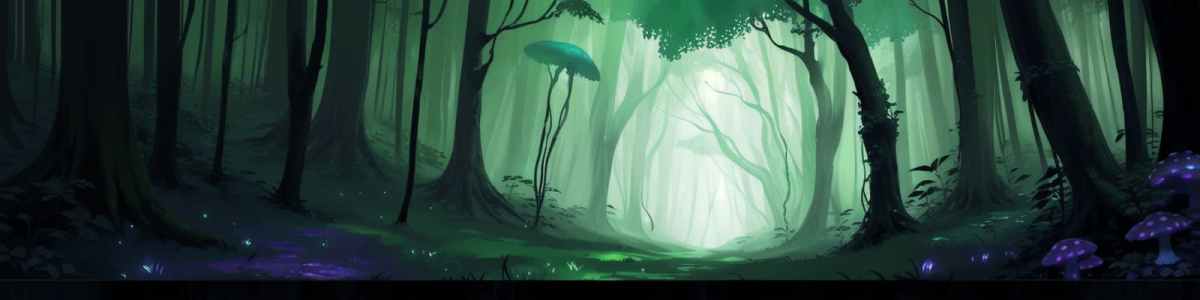
A threadwalker arrives in the Bloom — a world of fungal towers, green mist, and quiet rules that don’t quite fit. What begins as simple exploration shifts into something stranger, as keys reveal themselves, portals wake, and a sudden pull sets the path forward.

